
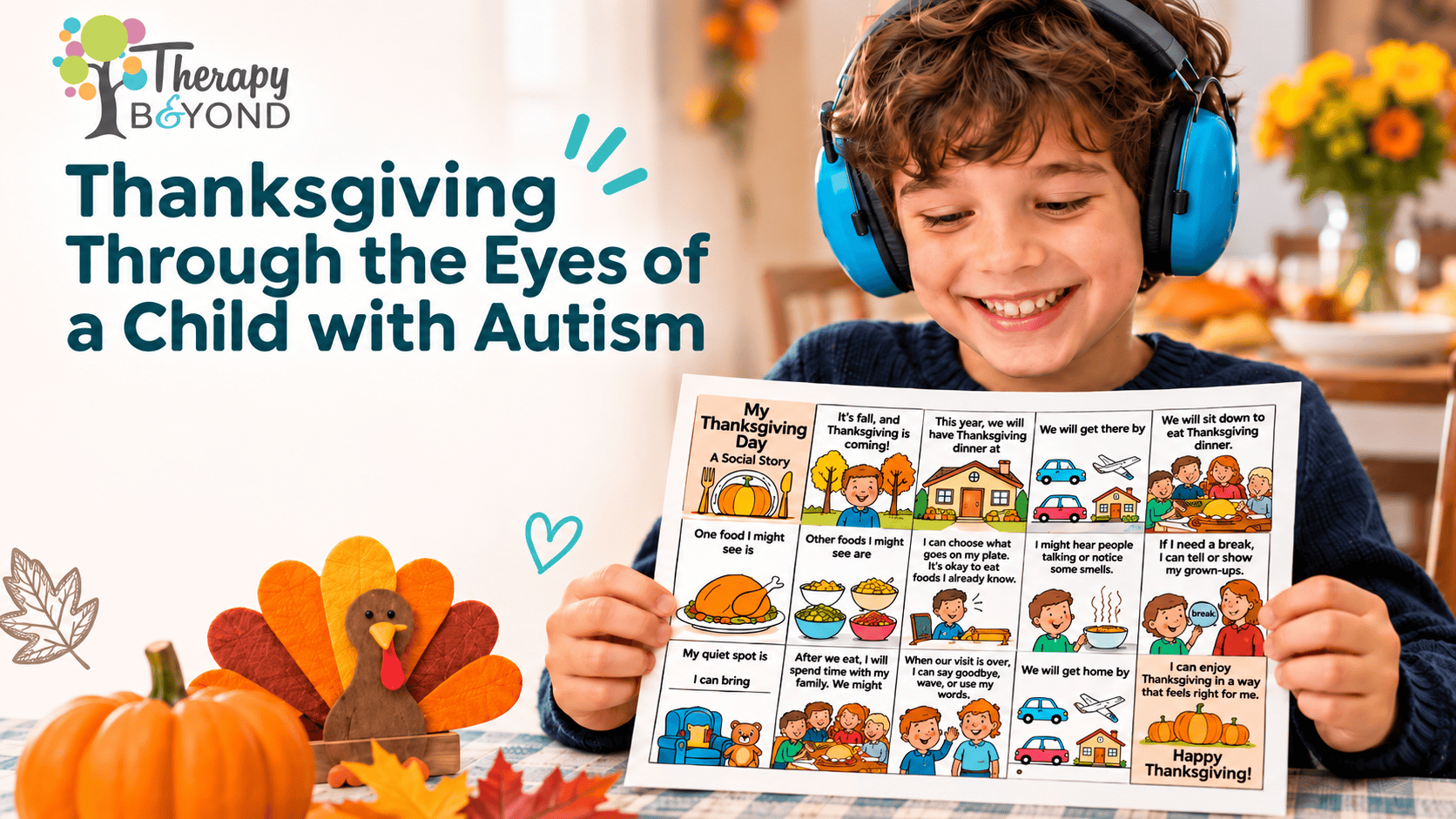
Thanksgiving Through the Eyes of a Child with Autism
By: Regina Crone, Ph.D., BCBA-D
Thanksgiving is one of those holidays filled with traditions. Families gather around the table, favorite recipes make their annual appearance, and relatives travel from near and far to spend time together.
It is worth considering what Thanksgiving looks like through the eyes of a child with autism.
For that child, walking into a house filled with unfamiliar faces can be jarring. Everyone wants to say hello, the kitchen smells different, conversations are happening all around, and they’re expected to sit down for a meal filled with foods they may have never tried.
And perhaps the hardest part? They’re not quite sure what’s going to happen next.
For some children with autism, Thanksgiving can be exciting. For others, changes in routine, sensory experiences, and social expectations can make the day overwhelming. Often, it’s a little of it all.
Parents naturally want their children to enjoy the holidays. But perhaps the best place to begin isn’t with the traditions they hope they’ll participate in. It’s with three simple questions:
Will my child feel comfortable? Will they feel confident? Will they feel connected?
These three ideas can change the approach to creating a successful Thanksgiving experience.
And that begins with preparation.
It Starts Here…
Adults have the advantage of knowing what to expect. They know whose house they’re visiting, who’s likely to be there, what foods will be served, and when they’ll head home.
But does a child know those things?
When a child is told, “We’re going to Grandma’s for Thanksgiving,” adults may think they’ve explained the plan. Yet there are still plenty of unanswered questions.
Who will be there? What will we do? Do I have to eat turkey? What if it’s too loud? When can we go home?
For a child who benefits from predictability, these details matter.
One of the most helpful things adults can do is make the unfamiliar more familiar before the experience begins.
One helpful tool is a social story. This can be especially helpful when preparing for unfamiliar situations or changes in routine.
Think of it as giving a child a preview of Thanksgiving.
Parents can personalize the story with details about their own Thanksgiving plans, making it more relevant and meaningful for their child.
DOWNLOAD YOUR FREE THANKSGIVING SOCIAL STORY
Five Ways to Help A Child Prepare for Thanksgiving
1. Tell the Story Before Thanksgiving Day
Start reading the Thanksgiving Social Story several days before the holiday.
Fill in the blanks together. Talk about when the celebrations will be, how to get there, and what might be done after dinner.
If visiting family, show the child pictures of the people they’ll see or the house they’ll visit.
Practice parts of the day through play. Set a pretend Thanksgiving table, practice greeting relatives in a way the child is comfortable with, or take turns choosing what goes on a plate.
Keep it fun and follow the child’s interest. Some children may want to read the story several times, while others may prefer looking at just a few pictures.
The goal isn’t to rehearse a perfect Thanksgiving. It’s to help every child recognize what may happen and feel more confident navigating it.
2. Take the Pressure Off the Plate for Picky Eaters
Thanksgiving is a holiday centered around food, but that doesn’t mean every child has to enjoy the traditional menu.
For a child with food sensitivities or selective eating patterns, a plate filled with unfamiliar textures, smells, and flavors can be intimidating.
Offer familiar foods alongside the holiday meal. Let the child choose what goes on their plate, and avoid making tasting new foods a requirement for participating.
A child who eats chicken nuggets while everyone else eats turkey is still part of Thanksgiving.
3. Prepare for the Sensory Experiences
Thanksgiving can be loud, even for adults!
There may be multiple conversations happening at once, football playing in the background, unfamiliar cooking smells, and relatives eager to interact.
Before the gathering, think about what might be difficult for a child. Would headphones help? Could they bring a favorite toy? Is there a quieter room where they can spend time?
It’s also helpful to prepare relatives ahead and let them know what the child likes, what makes him comfortable and how he plans to participate in the holiday.
4. Practice Asking for a Break
One of the most valuable skills to teach children is how to communicate when they need help or a break.
Our Thanksgiving Social Story includes an opportunity for families to identify a quiet spot and something comforting their child can bring.
It also introduces a simple but powerful skill: asking for a break.
Practice this before the holiday. A child might say “break,” point to a picture, use a gesture, or select a message on their AAC device.
And when a child communicates that need, respond to it.
Adults want children to learn that their communication is meaningful and that asking for help is something they can do successfully.
Don’t wait until a child is overwhelmed to offer a break. Sometimes stepping away for a few minutes can help them return to the celebration feeling more comfortable.
5. Let Connection Be the Goal
It’s easy to picture what Thanksgiving is supposed to look like. But meaningful participation doesn’t always look the same for every child.
Maybe a child sits at the table for five minutes before taking a break. Maybe they jumped on a trampoline outside. Maybe their favorite part of Thanksgiving was eating their own favorite food.
Those moments count and that’s where meaningful connections at Thanksgiving happen.
Download our free My Thanksgiving Day Social Story. It was created to help families prepare for the holiday with colorful illustrations, customizable details, and opportunities to practice communication.
Download it, make it your own, and enjoy reading it together.
DOWNLOAD MY THANKSGIVING DAY SOCIAL STORY — FREE
About the Author
Dr. Regina Crone, Ph.D., BCBA-D, is the Founder of Therapy & Beyond, an organization providing specialized therapy for children with autism. With more than 20 years of experience her clinical philosophy emphasizes naturalistic learning, meaningful connections, and helping children develop skills through everyday experiences and most importantly making learning fun!